Friday, June 21, 2013

How Do I Get Off Those Junk Mail Lists?

Direct Mail's Not-So-Dirty Little Secrets
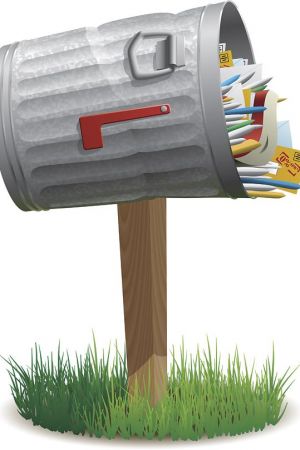
Getting tired of getting letter after letter from charities and politicians begging for money from you?  There's an easy way to stop the fund-raising letters that clog up your trash can week after week.  STOP DONATING!

That seems awfully harsh doesn't it?  Well it is, and as a semi-professional fund-raiser myself, I do not recommend it.  Everybody should be giving something to charity, to their church or to causes they believe in.  It's how communities address important problems and issues and solve them.  It's how we take care of abused animals and children, provide shelter for battered women and feed the poor.  It's how we support people we want to elect to be our representatives in government.

So what's a bunch of kind-hearted schmucks like you and me to do?   In an ideal world, people would send out straightforward fund-raising letters. We'd look at the cause and decide if it was something we wanted to support and mail them a check. The problem is, that kind of letter doesn't make a lot of money.

I used to write them, I know.  I tried to write honest, straight-forward appeal letters, but I'm afraid I wasn't very effective.  I simply stated the case, what we needed money for and why.  I rebelled at "pandering" and hand-wringing and playing upon the guilt thing with people.  Some of those appeals actually cost more in printing and postage than we got back in donations.

The ones that work are the ones with sad-eyed starving orphans, wounded dolphins and portrayals of evil politicians scheming to steal your food, starve your grandma or take away your guns.  These things are pandering of the first order.  They're full of disturbing images, hand-wringing and laced with guilt. Many charities make quite a lot of money on these direct mail campaigns.  They are easy for the charity and effective in that they raise significant dollars.  Many small charities use them because they are less expensive than hiring a fund-raising staff and can raise millions if you can proved them with a few heart-wrenching photographs and some heart-breaking stories. 

You should know, however that money raised via these fund-raising "professionals" only yields about 40% or less back to the cause. This type of fund-raising is expensive.  In most cases 60% or more of the "take" is eaten up in mailing, printing and consultant fees.  It is not uncommon for the first two or three campaigns to cost more than they bring in.

So if you want to donate 35 cents out of every dollar you send to a charity, simply tuck a check into the response envelope and your guilt may be assuaged in short order.  There is a premium for giving in this way, but it involves very little work and can yield big returns to the charity.  The wildlife refuge you support may get back a million dollars from this campaign out of the 2.5 million that was donated.  The flip side of that coin is that it is unlikely the refuge would ever have raised that kind of money any other way without an expensive development program that would distract from the work being done by the charity.

If you have a moral objection to paying the 60% tithe to the direct mailer, you can do this.  Write a check to the charity, look up their address, put the money in your own envelope with your own stamp and send it directly to them.  Don't mention the direct mail campaign.  Mark the check "for your work".  If you identify yourself as responding to the direct mail campaign, the charity is obligated under contract to forward that check to the bank account where the direct mailer is collecting donations where it will incur the mailer's fees just as if you'd sent it in the response envelope.

If you'd like to support the charity, but don't want to get all those horrific sad letters take the time to write a heartfelt letter to the charity explaining that you wish to be removed from their mailing list and to donate a fixed amount directly to the charity.  Ask to be sent a monthly reminder from the charity directly or set up some sort of automatic contribution through your own bank account.  The charity will be happy to send your name to the direct mailer for removal from the list.

Choose a handful of charities you like to contribute to and repeat this process.  They will then receive 100% of your contribution and you can rest assured your favorite charities are receiving regular support from you. You would be the kind of donor charities dream about.

You can't blame a small charity that needs a million dollars a year in operating funds for choosing a method that generates that much money over the prospect of slowly starving while trying to do it on their own.


One last note.  Occasionally you'll see someone griping about direct mail appeals on Facebook or somewhere and suggesting you send an angry letter in the response envelope.  This does no good, zero, zip, nada!  Sending stuff back in the response envelope costs the charity that hired the direct mail company a lot of postage.  The charity will never know about what you did.  All they will know is that they didn't do as well on this mailing and will probably be encouraged to buy another donor list from the company.

And THAT'S how you wind up on getting so many appeal letters.  The direct mail company sells one client's lists to its other clients.  The good news is that if you never respond to a direct mailing, you eventually get taken off the lists.  It takes years, but eventually they give up wasting their time sending you stuff. 

Should direct mail companies be done away with?  I have to say that, even as expensive as they are, NO.  Too many small charities doing very good work depend absolutely on them.  If you just want more of your money to go to the charity you love, then send it to them. Don't wait for an envelope with a starving puppy on it.  Send $5 a month to the ASPCA or Tyler Rescue Ministries or Azleway Boys Ranch or Tiger Creek Wildlife Refuge, Boys and Girls Club, your local food bank or any other charity you care about.  Specify that you don't want to be on a mailing list and especially don't want to have your name sent to a direct mailer.  It will save the charity a lot of postage over the years and they'll get all of your contribution instead of just a fraction of it.

Give smart!


Tom King
(c) 2013


Thursday, June 20, 2013

Hot Fudge Sauce


Great hot fudge recipe my wife got from a lady in Louisiana name Opal Martin.  Great for sundaes, banana splits and almost anything you’d like to put warm hot chocolate fudge on.  It only takes about 5 minutes to make.  This recipe is why I keep a supply of cocoa in the pantry at all times (this and the chocolate skillet cake recipe). I like more of a milk chocolate fudge myself and sometimes add a few tablespoons of evaporated milk when I make it.  Either way is terrific. Saved me many a trip to the grocery store when the missus gets a craving for a hot fudge Sunday.  I keep the leftover sauce in the fridge in some little fruit jars I keep for leftover fudge sauce, sweet and sour sauce, homemade tartar sauce or homemade pimento cheese.You can reheat the sauce for a few seconds in the microwave. It's just lovely stuff.

Ingredients:

  •   1 cup sugar
  •   1/3 cup cocoa
  •   3 tbsp flour
  •   1/3 tsp vanilla
  •      ¼ tsp salt
  •     1 cup boiling water
  •     1 tbsp margarine

Directions: 
 
1.     Mix dry ingredients together in a saucepan
2.     Add boiling water while stirring
3.     Cook for 3-4 minutes stirring constantly.
4.     Store in covered jar in the refrigerator

Makes 1½  cups.

 Stores nicely in a mandarin orange fruit jar - just sayin'


(c) 2013 by Tom King

Monday, March 18, 2013

Photography: The Rule of Thirds

Let's face it.  Go through most people's picture boxes and you will find hundreds of really, really boring pictures. Why?  Is it because all these people we took pictures of are dull.

Sorry.  It's the photographer.  Too often we take pictures as though we were scientist recording photos of experiments. We make sure the faces or the beautiful buildings or landscapes are on film.  What we neglect to capture is the essence of the face or building or landscape that made us want to take a picture.

There are lots of things photographers do to capture more than just an image.  I'm not going into all that.  I have just one secret to share with you.  What I'm going to show you now is the secret to creating good-looking pictures.  It's an old design trick know as the "Rule of Thirds". 

Here's how the rule of thirds works.  Check out this beautiful Glenn Sackett picture - Lake at Sunset:


Let's divide the horizontal aspect of the picture into thirds.


  Notice that the two main interest points of the picture, the sun and the peak are close to the lines that divide this photograph into thirds.  Now let's add lines that divide the picture into vertical thirds.


Notice how the peak is just about at the intesection of the vertical third and the horizontal as is the sunset.  Remember, the rule of thirds is not an iron rule, but rather a guideline.  What you want to avoid is the typical amateur photographers mistake of placing the center of interest in the center of the photograph.  There may be interesting stuff there, but always have something in the picture that draws the eye left or right, up or down from the center. 

Look at this photograph with people in it:


This is a photo my daughter Meghan took of my niece Jenny and me.  The composition is pleasing and interesting because it obeys the rule of thirds.  Let's draw our tic-tac-toe rule-of-thirds guide and see how.


Notice how my big fat head lines up where the top and left guidelines cross.  Jenny's face lines up along the top third guideline.  The results will give you a pleasing composition almost every time you shoot. 

If you imagine a tic-tac-toe diagram across every picture you shoot and line up the interesting bits along the guidelines, you'll produce far more interesting pictures.  The beauty of digital photography is that even if you're shooting quickly and things don't line up like you'd like the to, you can crop the photo to make it more interesting.  Let's start with this poorly composed photo:


 This is my daughter Meg at Disney world with "Chip".  The center of interest is dead center.  There is dead space all around and it makes the picture seem stiff.  Watch how we crop this to move Chip and Meg to line up a third of the way from the right.  This shifts the interest right.  We did it this way because Chip is looking slightly to the right so we want him looking into the pictuer since he has the biggest eyes.  Here we mark the area to be cropped.  Remember you can do this later in Photoshop or whatever photo editing software came with your camera.


 If you draw the two vertical lines separating the space into thirds, the subject of the new photo will be in the right third of the picture.  Chip's big head will be along the imaginary line at the upper third of the photo.  Crop the photo and it looks like this.


The picture simply looks better.  Meg's face is shaded (I shot this years ago with an old Pentax on slide film and without any fill flash to work with).  This is still not a great picture, but it is more interesting when you look at it.

So basically, avoid putting the dominant features of your photograph at the center.  Try to line them up along those imaginary hashmarks that separate the picture into thirds.  Try this with some old pictures that feel wrong, but you don't know why.  Try cropping them to make them more interesting.

Now you know the number one secret of "good photographers.  Try this out and see if you don't earn a "Wow, these are really good!" from the people you take pictures of.

Tom


*All pictures are my own except "Lake at Sunset" which is used by permission of Glenn Sackett Photography.  Check him out.  His nature photography is awesome!